

How To Repair A Cracked Flotec Sprinkler Pump Housing
Yous should upgrade or employ an culling browser.

- Add bookmark
- #1
products won't piece of work with this type of plastic and in this high pressure environment. I was not feeling like
spending $180 to replace the housing so using plastic molding technique with a soldering fe I took care
of the trouble. " This tool needs to be 60 watts minimum because you will be working on difficult plastic". You lot need to take
out the motor because the fissure demand to be set on both sides. Look at the photos. Wear a mask, dangerous fumes.
Attachments
- Add bookmark
- #3
- Add bookmark
- #4
a small piece of metallic screen placed on the repair spot and using the soldering iron
it volition melt the plastic surface and incrust itself into it for added strength.
- Add bookmark
- #six
- Add bookmark
- #7
I know you said epoxy don't piece of work, but take you tried JB Weld? This stuff is a miracle worker. My ex repaired a hole in his car radiator with information technology and it lasted another 2 years. No kidding. And I fixed our washing motorcar tub that got holes in information technology from a necklace that scraped the sides until it wore information technology down. That was, Oh gosh, probably fifteen years agone and I'm STILL using that auto. But, I don't recommend the "four hr set" kind. I would go with the one that requires atleast 24 hours.
I tried the JB water weld without success maybe is the extreme pressure of water that eventually pulls it off. I guess you can try but later on I did the plastic welding with soldering Iron I fix it and is working fine now.

- Add bookmark
- #eight
- Add together bookmark
- #9
This is what I did today. There was a crack line in my Hayward pump housing. Epoxies and other bonding
products won't piece of work with this blazon of plastic and in this high pressure surround. I was not feeling similar
spending $180 to replace the housing so using plastic molding technique with a soldering atomic number 26 I took care
of the problem. " This tool needs to be 60 watts minimum because you will exist working on hard plastic". You demand to accept
out the motor because the crack need to exist fix on both sides. Look at the photos. Article of clothing a mask, unsafe fumes.
are you saying y'all just melted the fissure together, did not use any other plastic , merely melted the inside and the outside together????
how does that stand up to water pressure, isn't the rest of the housing more than thick than the resulting repair line.
information technology looks similar I could do that, but I am not sure what other stuff you used or exactly what the term "using plastic molding technique" means."
I don't desire it to explode on me when I am done 
confused.
- Add together bookmark
- #10
are you saying you just melted the crack together, did not use any other plastic , simply melted the inside and the outside together????
how does that stand up upwardly to h2o pressure, isn't the rest of the housing more thick than the resulting repair line.it looks like I could do that, only I am not sure what other stuff you lot used or exactly what the term "using plastic molding technique" ways."
I don't want it to explode on me when I am done
confused.
Yeah, I simply melted the crack together with the soldering iron without using whatsoever other plastic. In the commencement photo you can meet
the starting time step. Melt that line crack, the plastic volition cook to the sides, then melt each side again to the inside of the crack. You lot demand to work both sides of the fissure. I did this six months ago and the housing is still working perfectly.
Don't waste your time with epoxies and other stuff this is the only manner because of the pressure. I did this really quick and believe me it is a super stiff bond.
- Add together bookmark
- #11
The main advantage is that later on you button existing plastic together (like Carli did) yous tin can and so add material on the outside to ensure permanent fix.
Carli, great job, this should give many people conviction to exercise this repair themselves and salve lots and lots of money.
An alternative to this "self" repair would be to take the empty plastic vanquish to their local auto body shop or specifically anyone who repairs bumpers. This is bones plastic bumper repair 101.
Bob E.
- Add bookmark
- #12
I had previously tried just using JB Weld on the outside of the crack, but the pressure would spread the fissure and split the JB Weld in just a couple of days. 

- Add bookmark
- #13
For the do good of others who may face like state of affairs in the time to come, I'll add together a few photos and comments.
My pump would not prime when the pool shop folks came to open up the pool final calendar week, and a cracked pump housing was discovered.
Before photos, from the front and from the back:
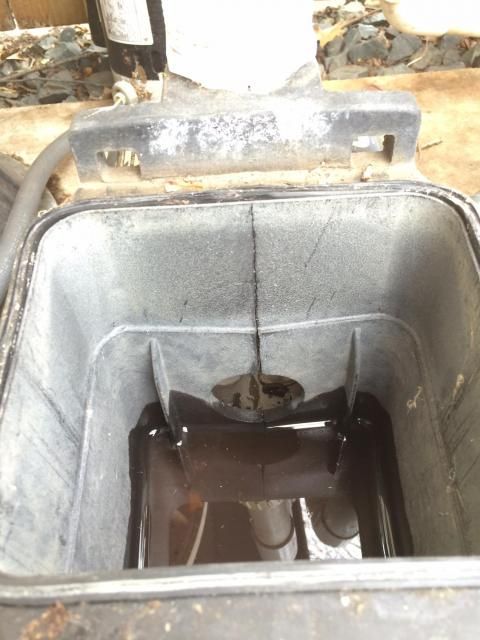
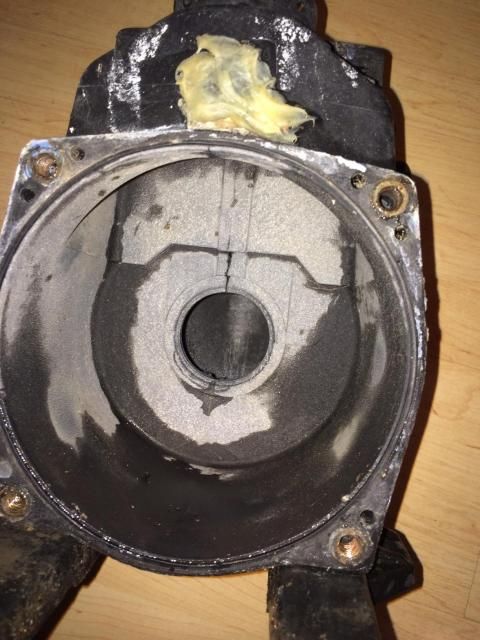
And the "after" photos:
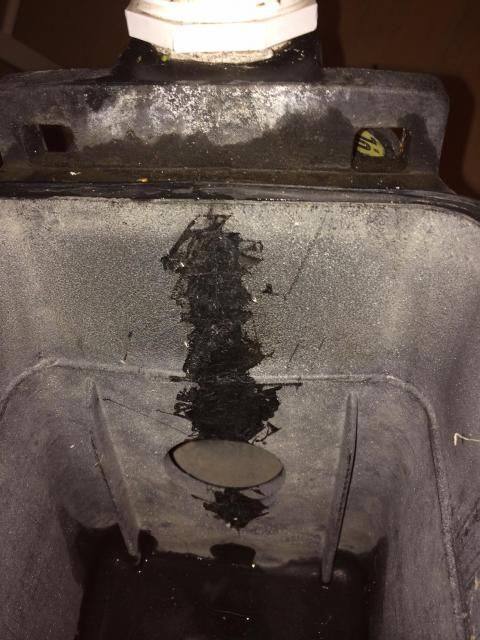
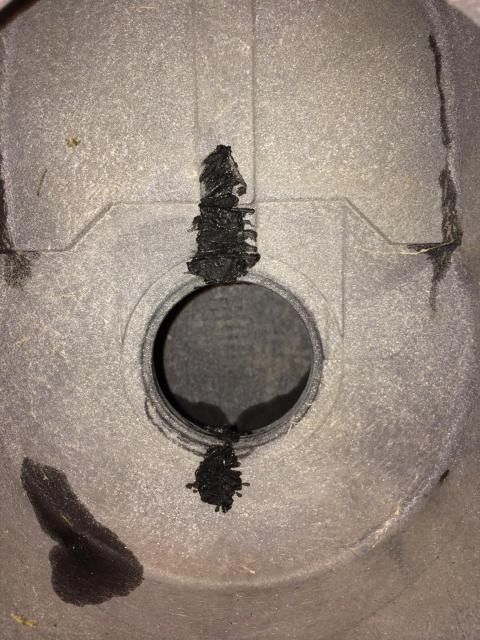
To practice this, I bought a cheap welding atomic number 26 from Harbor Freight for just over $15, and showtime tried simply welding from the front only with the pump in place still connected to the plumbing. I did this because I am no longer young and flexible enough to contort my body in such a fashion as to reach the inside of the dorsum of the pump to weld, even after the motor had been removed. The front end weld seemed to work at first but so afterward a few minutes information technology gave out, and so I decided that I might every bit well cut the pvc plumbing lines and remove the pump to access the back, especially since I would need to change the plumbing anyways if I had to supercede the pump.
In one case I cut the pipes and asunder the pump housing (without motor), I was able to position things somewhere that I could comfortably access and weld both front & back. The hardest part was reassembling the new plumbing, just that was going to have to happen regardless, so I figured I had nothing to lose past trying the welding. Worst case scenario was information technology wouldn't work and I would be out the cost of the welding iron and the fourth dimension and attempt invested.
Fortunately for me, it did work. My pump is back to working normally, and the cost of supplies was less than $30, which I much prefer to the $one,200+ quote from the pool company for a new variable speed pump. I may well get a new pump one-time soon anyway, merely I won't have to practice and then in a rush and under a time crunch.
Thanks once more, Carli. You da man! 
- Add bookmark
- #14
- Add bookmark
- #xv
You lot volition no doubt need to unbolt the pump and be able to disconnect the plumbing so that y'all tin access the pump and do any welds/repairs necessary. Even if that doesn't work, you'll need to remove the erstwhile pump anyways, to supercede it, so give it a go. Don't fret it. You have zilch to lose. You tin always try epoxy later if you lot want.
Adept luck.
P.S. Not sure why Carli'south photos wouldn't be showing for you lot. I tin can sure see them. In any event, they await much similar mine so don't sweat it.
- Add bookmark
- #16

- Add bookmark
- #17
I hope I am wrong on this one, merely be prepared.
- Add bookmark
- #18
- Add bookmark
- #19
clubjesek, at that place is no boosted plastic welding material. They but re-rut the pump material to melt and re-join once again as I understood.
- Add bookmark
- #20
I was able to pull the the pipe back and squeeze in some JB Kwik into the crack. I had to practice this quick because JB Kwik has a 15 min work time. JB Weld has a longer work time but, takes a 24 hr dry fourth dimension. The pieces have to be pressed together and held in place for drying, and then the regular JB Weld wouldn't do, unless you can clench it in identify.
Once the JB Kwik was applied, I pressed the crack together and wiped down the excess on both sides. With the crack still pressed together and a cleaner surface, I used the soldering iron to surface weld sections of the crack. The soldering iron welds held the crack together equally the JB Kwik finished drying. I continued to soldering iron weld the crack equally the JB Kwik was nonetheless drying. Welding the plastic crack together while the JB Kwik is dried or not, didn't brand a deviation to me.
I had 2 soldering irons on mitt, but found that the ane with a 3 prong plug from Home Depot was hotter and worked better than the 2 prong plug one I bought from Harbor Frieght. So I concluded upwardly only using the three prong soldering atomic number 26. I used a regular pointed tip and had paper towels on mitt that I folded down a couple of times to wipe down the soldering iron tip. I welded information technology exterior, in a well ventilated area and had to blow the smoke away from my confront frequently.
The welding technique is easy and past the terminate of it, I had a technique that piece of work well and went over the areas I first started on. I but pressed the soldering fe onto the crack to melt it, then rub both sides of the same area and melt the sides as well. Then spread the melted plastic over the crack to cover information technology. The work area is almost 1/2 an inch at a time. The melting depth is around the thickness of a penny. The casing is very thick, so melting in deep wasn't a problem and makes the weld stronger. Yous don't add together any outside materials at all, like you would in metal welding or plastic welding. You're basically just melting the 2 pieces dorsum together and filling in the crack.
Like threads
- Welcome to TFP! For a wealth of pool care information please cheque out our complimentary Puddle School. If you are in need of specific help so we encourage you lot to Register and ask usa hither in the forum!

How To Repair A Cracked Flotec Sprinkler Pump Housing,
Source: https://www.troublefreepool.com/threads/how-to-fix-a-cracked-pump-housing.54731/
Posted by: bloomwastles.blogspot.com
0 Response to "How To Repair A Cracked Flotec Sprinkler Pump Housing"
Post a Comment